
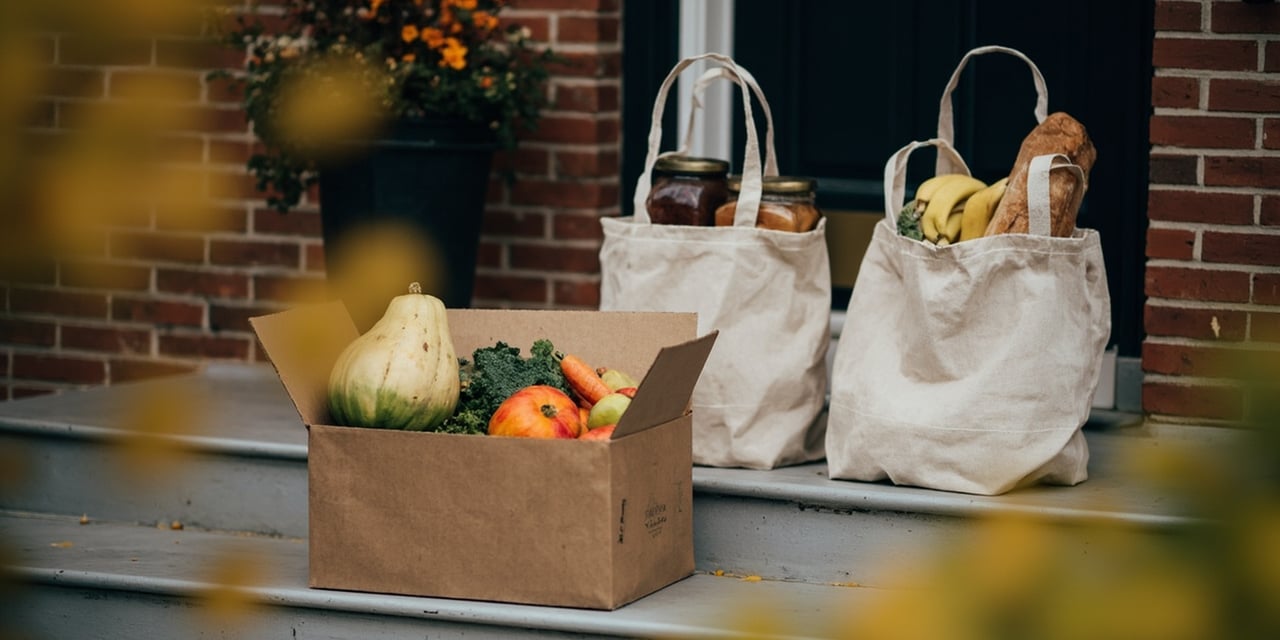
Ask what groceries cost in Reston and you will usually get a single confident number. There is no such number. Reston is an unincorporated community inside Fairfax County, and no government agency or research group prices a shopping basket here specifically. What does exist is a set of published sources that, used in the right order, will get a Reston household to a realistic monthly figure.
This guide builds that figure in five steps: price your household on the federal food plans, decide how far above the national average to aim, choose a store mix, account for delivery and memberships, and read the receipt. Every dollar figure and percentage below comes from a named source, and wherever we have done arithmetic on a source, we say so. Everything was checked in October 2026.
The quick version, with sources
Question | Short answer | Source |
|---|---|---|
What does a healthy home-cooked diet cost? | A couple under 51: about $652 to $1,007 a month. A family of four with two school-age children: about $1,126 to $1,679. | USDA food plans, August 2026, US average |
Is it dearer around here? | The DC grocery index is 108.0 against a national 100; Virginia's state average is 100.4. MIT's food line for a Fairfax County family of four works out to about $1,277 a month. | C2ER Cost of Living Index via MERIC, Q2 2026; MIT Living Wage Calculator |
Are prices rising faster here? | Washington-area food at home rose 5.6% in the year to July 2026; the national figure was 2.2% in the year to August. | BLS; USDA Economic Research Service |
What moves the bill most? | Where you shop. ALDI ran 36% below the regional all-store average, Lidl 21% below, Whole Foods 14% above. | Consumers' Checkbook, November 2025 |
What is on the receipt? | 1% tax on groceries; hot meals carry 6% sales tax plus Fairfax County's 4% meals tax in Reston. | Virginia Tax; Fairfax County |
Why nobody publishes a Reston grocery price
The usual cost-of-living tools stop at a bigger boundary. The Bureau of Labor Statistics measures price changes for the whole Washington metro area. The USDA prices a healthy diet for the United States as a whole. Cost-of-living indexes are built from participating urban areas and then averaged up to state level. Reston, with no town government of its own, is not broken out in any of them.
That is not a reason to guess. It is a reason to start from the most rigorous national figure and adjust it, deliberately, for the things that actually differ here. The five steps below do exactly that.
Step one: price your household on the USDA food plans
The USDA publishes monthly costs for four food plans — Thrifty, Low-Cost, Moderate-Cost and Liberal — each describing a nutritious diet at a different spending level, with every meal and snack prepared at home. The costs are updated each month for inflation. The latest figures, for August 2026, were posted on 24 September 2026.
The plans are priced per person, by age and sex, for a four-person household, with official adjustments for other sizes: add 20% for one person and 10% for two. We have added up the published figures for a range of household types:
Household (monthly, US average) | Low-Cost | Moderate-Cost | Liberal |
|---|---|---|---|
One adult aged 20–50 | $331–$381 | $403–$478 | $515–$583 |
Couple, both 20–50 | $652 | $808 | $1,007 |
Couple, both 51–70 | $624 | $777 | $933 |
Two adults, children aged 2–3 and 4–5 | $945 | $1,163 | $1,435 |
Two adults, children aged 6–8 and 9–11 | $1,126 | $1,388 | $1,679 |
Two adults, two teenagers aged 14–19 | $1,186 | $1,461 | $1,788 |
Our sums of the USDA's August 2026 per-person costs, including its household-size adjustments. The single-adult range runs from the female to the male figure; the teenage household assumes one boy and one girl.
Three things stand out. Teenagers cost more to feed than younger children — on the moderate plan, the teenage household runs about $300 a month more than the household with a toddler and a preschooler. A couple over 50 costs a little less than a younger couple at every level. And the gap between the low-cost and liberal plans is wide enough, roughly half again, that your own eating habits matter more than any regional adjustment.
The Thrifty plan, the one used to set maximum SNAP benefits, prices the same family of four with school-age children at $1,023.70 a month. In weekly terms, the moderate plan for that family comes to about $320, which is a useful number to keep in mind for step three.
Step two: decide how far above the national average to aim
The USDA figures are national averages. Two published sources let you judge how far Northern Virginia sits from them.
The first is the C2ER Cost of Living Index, which prices goods and services for professional and managerial households in participating urban areas every quarter. C2ER's second-quarter 2026 release says its grocery component draws on hundreds of millions of retail prices, and the Missouri Economic Research and Information Center republishes the state-level results in its cost of living data series. For the second quarter of 2026, with the US at 100, the grocery index stood at 108.0 for the District of Columbia, 108.2 for Maryland and 100.4 for Virginia. Virginia's figure is an average of whichever Virginia urban areas take part, so it says little about Northern Virginia specifically. C2ER itself cautions that small differences in its index should not be over-read.
The second is the MIT Living Wage Calculator for Fairfax County, which estimates a basic, home-cooked food budget county by county: $5,234 a year for one adult, $9,596 for two adults and $15,319 for two adults with two children. That last figure is about $1,277 a month, roughly 13% above the USDA's national low-cost figure for a similar family.
Put the two together: the DC grocery index sits 8% above the national average, and MIT's Fairfax County figure about 13% above the USDA's low-cost plan. Neither measures Reston itself, but adding a margin in that 8 to 13 percent range to a USDA figure is a defensible, clearly sourced way to plan a first Reston budget.
Step three: choose your store mix
This is where the real money is. The most useful published comparison for this region is the Consumers' Checkbook survey of Washington-area supermarkets, updated in November 2025. Its researchers priced a 150-item shopping list across the region's chains and surveyed members on quality. Here is how its findings map onto the stores Reston households actually use:
Store | Nearest to Reston | Checkbook price finding |
|---|---|---|
ALDI | 36% below the all-store average | |
Lidl | 21% below the all-store average | |
Wegmans | About 10% below Giant, Harris Teeter and Safeway | |
Trader Joe's | About 5% below Giant, Harris Teeter and Safeway; about 6% above Wegmans | |
Giant, Harris Teeter, Safeway | Giant, North Point; Harris Teeter, Spectrum Center; Safeway, South Lakes and Hunters Woods | Above average, within 1–2% of one another |
Whole Foods Market | About 14% above the all-store average; about 18% above Wegmans |
Checkbook does its own arithmetic: for a family spending $300 a week, a 15% price difference is worth $2,340 a year. Applying its percentages to a notional $300 week at an average-priced store gives a sense of scale — roughly $192 at ALDI, $237 at Lidl and $342 at Whole Foods. Those are the survey's percentages applied to a round number, not prices anyone was quoted.
Two caveats come with those gaps. ALDI, Lidl and Trader Joe's sell mostly their own brands, so Checkbook used a modified basket matched against conventional stores' cheapest comparable store brands; if your list is built on particular national brands, the savings shrink. And MOM's and Sprouts on Elden Street in Herndon, which scored among the best for produce quality, have no published price position, so we quote none.
Geography matters too. Inside Reston, the cheapest format in the survey is Wegmans; the deep-discount stores are all a drive outside town. Lidl's Herndon store, which opened in October 2025 in a former Kohl's building, is the closest of them for most of Reston and is open 8 a.m. to 9 p.m. daily.
Step four: price the convenience — delivery and memberships
Many relocating households lean on delivery in the first months, and Checkbook priced that too. In its grocery delivery study, an order that would cost $300 at an average-priced store came to between $261, ordering from ALDI, and $447, ordering from Giant through Shipt, once fees, markups and a $30 tip were included.
- Store-run delivery is cheap. Excluding the tip, ordering through the stores' own services cost only a few dollars extra at Giant, Safeway and Whole Foods, among others.
- Third-party markups are not. Ordering from Giant, Safeway or Wegmans through Instacart cost $69 more than shopping in person, before the tip; Giant through Shipt cost $90 more.
- Memberships pay off with frequency. Most delivery memberships run about $99 a year, and Checkbook found that above roughly ten orders a year, a membership usually beats per-order fees.
- Whole Foods delivery needs Prime. That means a Prime membership at $14.99 a month or $139 a year.
Warehouse clubs are the other membership question. Checkbook's warehouse-club comparison found Costco about 31% cheaper than Safeway on the same brands, priced per unit in larger sizes — an advantage the survey itself flags, since bulk sizes flatter the comparison. The nearest Costco is in Sterling, at 21398 Price Cascades Plaza, and membership costs $65 a year for Gold Star or $130 for Executive, which returns 2% on qualifying purchases. The upgrade pays for itself only above about $3,250 a year of Costco spending, which is our arithmetic on Costco's figures. And as Checkbook puts it, if half of what you buy in bulk spoils, you will not save.
Step five: read a Reston receipt
Because Reston is not a town, its residents pay county rates, and since 1 January 2026 that includes a new county meals tax. Here is what applies at a Reston checkout:
What you buy | Tax in Reston |
|---|---|
Groceries and cold food for home | 1% reduced rate |
Hot prepared food | 6% general sales tax |
Meals from restaurants and other designated food establishments | 6% sales tax plus Fairfax County's 4% food and beverage tax |
Disposable plastic bags at grocery, convenience and drug stores | 5 cents a bag |
Sources: Virginia Tax on the reduced grocery rate, which excludes hot food packaged for immediate eating, and on the general sales tax; Fairfax County on its food and beverage tax; and the county's guide to the plastic bag tax.
The practical gap is large. A $100 grocery run carries about $1 of tax; $100 of prepared food sold as a meal can carry up to $10. Whether a particular store's hot bar counts as a meal is the store's classification, so check the receipt. One local wrinkle: the county meals tax does not apply in the Town of Herndon, which levies its own, as FOX 5 summarized when the tax took effect. Grocery items are exempt from the county tax.
Where grocery prices are heading
A budget built on last year's receipts will be short. The latest Washington-area Consumer Price Index, covering the year to July 2026, showed:
- Food at home up 5.6% over the year.
- Nonalcoholic beverages up 17.6% — coffee, tea, juice and soft drinks.
- “Other food at home” up 7.5%, a category that includes sugar and sweets, fats and oils, snacks and prepared foods.
- Food away from home up 4.2%.
Nationally, the USDA Economic Research Service's September 2026 Food Price Outlook reported grocery prices 2.2% higher in August than a year earlier, with eggs up 3.5% in a single month. It forecasts food-at-home prices rising 2.4% across 2026 and 1.8% in 2027, though its 2027 forecast range is very wide. The national and Washington-area figures cover different months, so treat the comparison as a direction rather than an exact gap. BLS publishes the Washington-area index every two months, so check for a newer release before you finalize a budget.
What local food really costs: farm shares and the Lake Anne market
Farm shares are one of the few grocery costs here with a published price list. Potomac Vegetable Farms, which hands out shares at the Reston Farmers Market at Lake Anne on Saturday mornings, posted these prices for its 25-week 2026 season:
Share size (Potomac Vegetable Farms, 2026) | Per week | Season, farm or market pickup | Season, porch delivery |
|---|---|---|---|
Mini — about six items, for one person or a couple who eat out often | $33 | $825 | $925 |
Regular — about nine items, most of two adults' weekly vegetables | $40 | $1,000 | $1,100 |
Robust — about twelve items, for a larger family | $50 | $1,250 | $1,350 |
Delivery to a host porch adds $4 a week; pickup at the market has no delivery fee. The farm offers three separate 4% discounts — early registration by 15 February, returning members and paying in full — worth up to 12% together, and lets members pay in three installments.
Honey Brook Farms, which also distributes at the Lake Anne market, charged $700 for its 20-week 2026 summer season, or $35 a week, for a box of six to eight items that it says typically feeds two or three people cooking about four times a week.
The Reston Farmers Market is also one of five county markets where SNAP shoppers receive up to $40 of extra fruit and vegetables free each visit, funded through Virginia Fresh Match and local partners. The 2026 market runs every Saturday until 21 November.
Four Reston households, budgeted from the sources
These are illustrations built from the figures above, not quotes. Each starts from the USDA plans, applies the local cross-checks from step two, and then shows what the store and delivery decisions do.
A single professional commuting on the Silver Line. The USDA moderate plan puts one adult at $403 to $478 a month, and MIT's Fairfax County basic figure for one adult is about $436. Splitting the week between Wegmans and Trader Joe's keeps that realistic. Third-party delivery is the trap: ordering from a conventional store through Instacart added $69 to Checkbook's $300 test order before the tip, a cost that a one-person household feels quickly.
A couple in their sixties, downsizing. The USDA low-cost and moderate plans for two adults aged 51 to 70 run $624 to $777 a month. A Costco membership only makes sense if the bulk sizes get eaten; a Potomac Vegetable Farms mini share at $33 a week may suit two people better than a regular share.
A young family with a toddler and a preschooler. The moderate plan is $1,163 a month, or about $1,280 with a 10% local margin, the middle of the range in step two. A fortnightly Lidl or ALDI run for staples, with fresh food bought nearer home, is the single largest saving available on Checkbook's numbers.
A family with two teenagers. This is the most expensive household in the table: $1,461 a month on the moderate plan and $1,788 on the liberal one, before any local margin. Here the warehouse club is most likely to pay for itself, and the beverage aisle, up 17.6% in the Washington area, is worth watching closely.
Store-by-store ways to spend less in Reston
- Wegmans. Swap in store brands where you do not care about the label. Checkbook found that substituting store brands for about a third of the national-brand items on its list cut the total by about 5%.
- Giant. Join its free Flexible Rewards program; points convert into grocery discounts or fuel savings.
- Safeway. The free forU program offers personalized weekly deals, points on eligible purchases that convert into gas or grocery discounts, and a free item each month.
- Harris Teeter. Use the free VIC card for member prices, digital coupons and fuel points.
- Trader Joe's. There is no loyalty card or coupon program, so compare its shelf price directly against the others.
- Lidl. Its weekly deals refresh every Wednesday, with a Friday-to-Sunday Weekend Super Sale, according to the company's Herndon opening announcement; the Lidl Plus app carries digital coupons.
- Whole Foods. Buy the specialty items there and the staples elsewhere; Prime members get extra deals in store.
- Costco. Check the Executive upgrade against your actual spending before renewing.
- Anywhere. Checkbook's shopping tips include two that pay quickly: weigh produce sold by the head, since it found lettuce heads from 10 to 29 ounces at the same price; and buy a rib eye or pork loin roast and ask the butcher to slice it, which it found typically costs 50 cents to $1 a pound less than the steaks or chops.
If the budget gets tight
Reston has a long-established local safety net. Cornerstones, the Reston-based nonprofit, runs the Laurel Learning Center at Lake Anne Plaza, which includes a food pantry, as FFXnow reported in February 2026; details are on the Cornerstones website. At the Saturday market, the SNAP match described above stretches benefits further, and the Virginia Senior Farmers Market Nutrition Program provides $50 of market vouchers to approved older residents.
Reston market snapshot
Groceries are one monthly cost; housing is the one that decides most budgets. These are Bright MLS closed residential sales in the Reston ZIP codes for the twelve months to 9 September 2026.
Metric | Reston, VA (20190 / 20191 / 20194) |
|---|---|
Closed sales in the period | 1,047 |
Median days on market | 8 |
Average days on market | 22.0 |
Median sale-to-list price | 100.0% |
Average sale-to-list price | 100.3% |
A median of eight days means the monthly-cost homework — mortgage, association dues, commute, groceries — needs to be done before the search starts, not during it. Our mortgage calculator covers the largest line; this guide covers one of the smallest you fully control.
Frequently asked questions
How much are groceries per month in Reston, VA?
No source prices Reston alone. The USDA's August 2026 food plans put a family of four with school-age children at about $1,126 to $1,679 a month and a couple under 51 at about $652 to $1,007, as US averages. Local cross-checks from C2ER and MIT suggest adding roughly 8 to 13 percent for Northern Virginia.
Are groceries more expensive in Reston than the national average?
Somewhat. C2ER's second-quarter 2026 grocery index was 108.0 for the District of Columbia against a national 100, and MIT's Fairfax County food estimate for a family of four is about 13% above the USDA's national low-cost figure. Washington-area grocery prices also rose faster than the national average in the latest year.
What is the cheapest grocery store near Reston?
In Consumers' Checkbook's November 2025 Washington-area survey, ALDI's prices were 36% below the all-store average and Lidl's 21% below. Neither has a store inside Reston: the nearest Lidl is at 2110 Centreville Road in Herndon, and the nearest ALDI stores are in Sterling and Chantilly. Inside Reston, Wegmans priced lowest of the stores in the survey.
Is there an ALDI or a Lidl in Reston?
No. Lidl opened its closest store, at 2110 Centreville Road in Herndon, in October 2025; it is open 8 a.m. to 9 p.m. daily. ALDI's nearest stores are on Tripleseven Road in Sterling and Lee Jackson Memorial Highway in Chantilly.
What tax do you pay on groceries in Reston?
Groceries for home use are taxed at Virginia's reduced 1% rate. Hot prepared food is taxed at the full 6% sales tax rate, and meals sold by restaurants and other designated food establishments in Reston also carry Fairfax County's 4% food and beverage tax, in effect since 1 January 2026. Disposable plastic bags cost 5 cents each.
Is grocery delivery worth it in Reston?
It depends on the route. Checkbook found store-run delivery added only a few dollars per order before tip, while ordering through Instacart from Giant, Safeway or Wegmans added $69 to a $300 order, and through Shipt from Giant $90. If you order more than about ten times a year, a membership usually beats per-order fees.
How competitive is the Reston housing market?
Bright MLS recorded 1,047 closed residential sales across 20190, 20191 and 20194 in the twelve months to 9 September 2026, with a median of eight days on market and a median sale price at 100.0% of list.
Planning the full cost of a Reston move?
Groceries are one of the few monthly costs a new household controls completely. The Keri Shull Team helps buyers relocating to Reston and across Northern Virginia work out the whole picture — carrying costs, commute, schools and the everyday errands — before they commit to a street rather than after.
Get in touch to talk through neighborhoods and timing, request a home valuation if you have a home to sell first, read the Reston neighborhood guide, or browse homes for sale in Reston. If you are weighing a neighboring market, we have run the same numbers for grocery costs in McLean.
Prices, fees and tax rates change. Food-plan costs are the USDA Official Food Plans for August 2026 (US average), summed by household as described. Local comparisons are the C2ER Cost of Living Index for the second quarter of 2026 as published by MERIC, and the MIT Living Wage Calculator for Fairfax County. Price trends are the BLS Consumer Price Index for the Washington-Arlington-Alexandria area for July 2026 and the USDA ERS Food Price Outlook of September 2026. Store comparisons are Consumers' Checkbook's Washington-area research updated November 2025. Membership and farm-share prices are as published by Costco, Amazon, Potomac Vegetable Farms and Honey Brook Farms. Household examples are illustrations, not quoted basket prices. Store details were checked in October 2026. Market figures are Bright MLS closed residential sales for the twelve months ending 9 September 2026.