
By The KS Team
Arlington is a dense, walkable, transit-rich county that runs like a city, and that distinction matters for almost every decision you will make about where to live, how to commute, and what your daily life will look like. Arlington offers world-class transit, strong public schools, a serious job market, and some of the most walkable neighborhoods in the Mid-Atlantic. It also means higher housing costs, limited parking, and a real estate market that does not wait for you to think things over.
Here's what we tell people when they ask us what Arlington is actually like.
Key Takeaways
- Transit is genuinely excellent: Arlington is served by four Metro lines with major hubs at Rosslyn, Courthouse, Clarendon, Ballston, and Crystal City. Car-free or car-light living is realistic for many residents.
- Neighborhoods vary significantly: Rosslyn and Clarendon offer urban high-rise living. North Arlington has larger homes and quieter streets. Crystal City and National Landing are evolving fast with Amazon HQ2 driving demand.
- Housing is competitive: Well-priced homes move fast, and the competitive dynamics are worth understanding before you start.
- Cost of living is real: Housing is the biggest driver, but property taxes, the Virginia car tax, and condo fees all add up. Our breakdown of the cost of living in Arlington compares it directly to Alexandria and DC.
Neighborhoods: Where You Live Shapes Everything
Arlington is not one neighborhood. It is a collection of distinct communities with different housing types, price points, demographics, and daily rhythms.
- Rosslyn sits right on the Potomac across from Georgetown, with high-rise condos, river views, and direct Metro access on three lines.
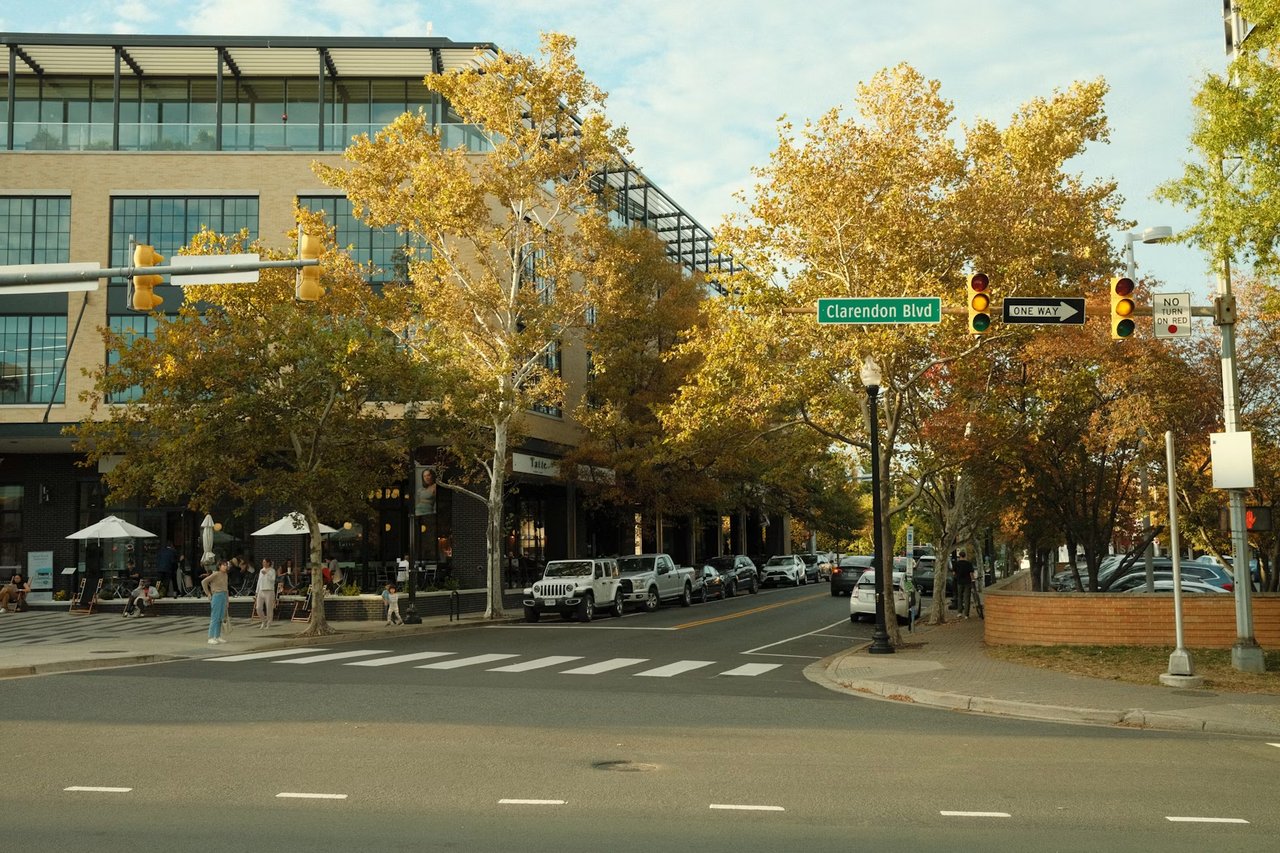
- Clarendon and Courthouse are the social and commercial heart of the county: walkable streets lined with restaurants, bars, and shops, built around Metro access and attracting young professionals and couples.
- Ballston has evolved into a tech and entertainment hub anchored by the Ballston Quarter redevelopment, drawing professionals and Amazon employees who want walkable convenience with slightly more residential character.
- North Arlington, neighborhoods like Lyon Village, Cherrydale, and Waycroft-Woodlawn, offer tree-lined streets, Craftsman homes, larger lots, and strong school feeder zones. Quieter and more family-oriented, with prices to match.
Crystal City and National Landing to the south are transforming fast. Amazon HQ2's phased build-out is already changing these neighborhoods, and the long-term trajectory is toward one of the region's most significant urban development zones.
Getting Around: Transit, Bikes, and the Car Question
One of the most practical things to understand about Arlington is that transit quality varies significantly by where you live within the county.
- Along the Rosslyn-Ballston corridor and the Crystal City-Pentagon City stretch, Metro access is excellent, and car-free living is genuinely realistic.
- Over 100 miles of paved and on-street bike paths connect Arlington's neighborhoods and link to regional trails like the Mount Vernon Trail and Four Mile Run.
- Move into more residential North or South Arlington, away from the Metro corridor, and a car becomes more necessary, along with Virginia's annual personal property tax on vehicles.
If transit access is a priority, be specific about which neighborhood and which Metro station matters to your commute rather than defaulting to "Arlington" as a single zone.
The Real Estate Market
Living in Arlington, VA means navigating one of the most competitive housing markets in the Mid-Atlantic. When a well-priced property in a strong neighborhood hits the market, it moves.
- The housing mix spans from high-rise condos along the Metro corridors to large single-family homes in North Arlington, with everything in between.
- Amazon HQ2's ongoing development in National Landing continues to shape demand in South Arlington and has already changed the competitive dynamics of Crystal City and Pentagon City.
- Arlington enters 2026 as one of the strongest real estate markets in Northern Virginia, with strong property values and sustained demand driven by the job market, transit access, and limited supply.
- For current data, our Arlington real estate market update covers what is happening with prices, inventory, and days on market right now.
If you are ready to explore what is available, browsing Arlington homes for sale gives you a clear picture of the market at different price points and neighborhoods.
FAQs
Is Arlington a good place to live without a car?
It depends on where you live. Along the Rosslyn-Ballston corridor and in Crystal City and Pentagon City, yes: Metro access, walkability, and bike infrastructure make car-free living practical. In residential North or South Arlington, away from Metro stations, a car is typically considered more necessary.
What is the biggest downside of living in Arlington?
Cost. Housing is high, and Virginia's car tax, property taxes, and condo fees compound it. The trade-off is access to jobs, transit, schools, and a quality of life that is hard to replicate in nearby markets.
How do Arlington's schools compare across the county?
Strongly overall, with variation by feeder zone. North Arlington's patterns are particularly well-regarded, and school zone matters when choosing where to buy.
Ready to Make Arlington Home?
Living in Arlington, VA is genuinely rewarding for the right person. If you value transit, walkability, career access, and a community that takes education seriously, it delivers. If you are ready to explore the market, we can help you navigate it.
We're the KS Team. Reach out today, and let's talk about finding the right home in Arlington for you. In the meantime, feel free to browse our guide to moving with kids to Arlington.