
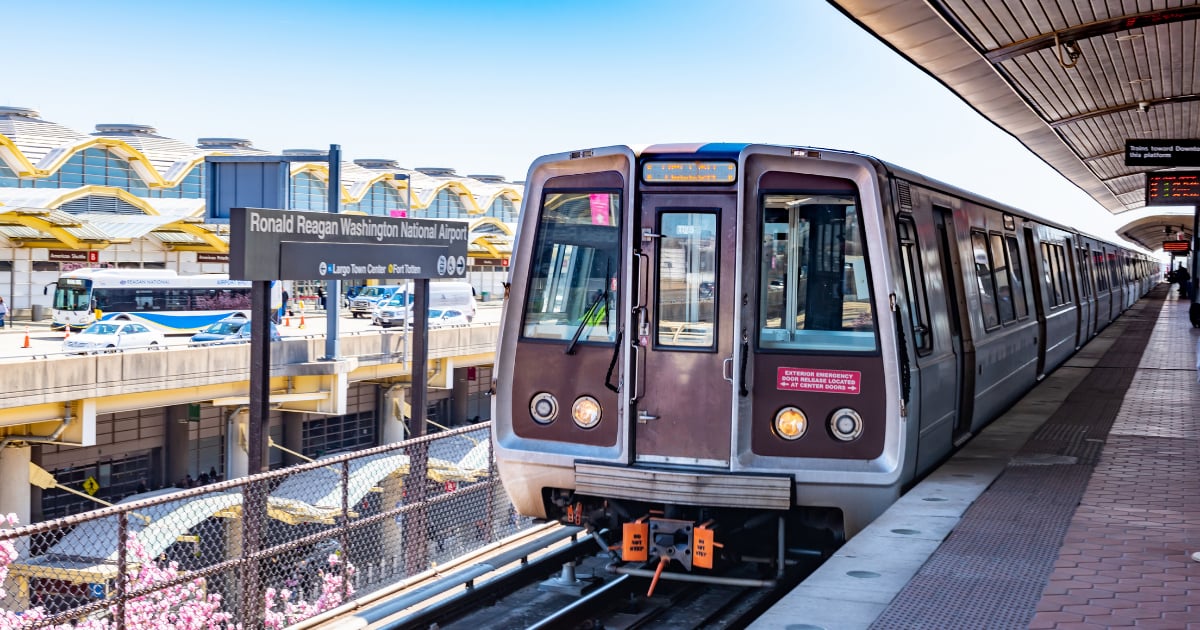
In DMV real estate, few features influence day-to-day lifestyle and long-term resale like Metro access. Whether you’re buying a home in the DMV for your first place in Arlington, moving closer to D.C. for a shorter commute, or thinking about selling your Arlington VA home, transit is often the quiet factor that shows up loudly in pricing. In Arlington VA real estate 2026, buyers are increasingly value-driven—so the ability to walk to Metro (and the restaurants, parks, and job centers that cluster around it) can make a measurable difference.
Below, we’ll break down the “Metro Effect,” how it plays out across Arlington, Alexandria, Falls Church, and D.C. neighborhoods—and how to use it strategically as a buyer or seller.
How does Metro access affect home values in Arlington and D.C.?
Transit access tends to boost home values for one simple reason: it buys back time (and reduces the friction of daily life). A Metro-friendly home can appeal to commuters, hybrid workers, students, downsizers, and investors—often widening your buyer pool when it’s time to sell.
A Freddie Mac analysis focused on the Washington, D.C. metro area found that homes closer to Metro stations generally sold for more, and that the premium increased the closer a home was to a station—sometimes reaching as much as a 14% premium in certain cases.
Why the premium exists in the first place:
-
Commute reliability (especially to downtown D.C., the Pentagon, Amazon HQ2 area, and major corridors)
-
Walkable amenities clustered near stations (restaurants, gyms, grocery, nightlife)
-
Lower transportation costs (fewer car miles, fewer parking headaches)
-
Resale resilience because demand stays broader across buyer types
And the Metro’s influence goes beyond individual commutes—Metro access has been credited with supporting the growth of major activity hubs like Ballston, Penn Quarter, and the U/14th Street corridors, helping shape where the region’s most in-demand neighborhoods thrive.
What is the “transit premium” in DMV real estate—and how big can it be?
The “transit premium” is the added value a home can command because it’s near convenient, high-quality transit.
The key nuance: closer isn’t always better for everyone. The same Freddie Mac report notes that proximity can come with tradeoffs—noise, street parking pressure, and busier streets—so the premium depends on the block, the building, and the buyer profile.
A practical rule of thumb many buyers like:
-
“Goldilocks zone”: close enough to walk comfortably, far enough to avoid the busiest station-adjacent impacts.
Which Arlington neighborhoods feel the Metro effect most?
Arlington is one of the strongest examples of transit-oriented demand in the entire DMV because so much of the county’s “where people want to be” living lines up with Metro stops.
Areas where Metro access often influences pricing and competition:
Rosslyn–Ballston Corridor (Orange/Silver)
Rosslyn, Courthouse, Clarendon, Virginia Square, Ballston
This corridor pairs Metro access with walkability, dining, and strong long-term buyer demand. Homes here often compete on lifestyle: “walk to coffee + commute without a car.”
National Landing (Blue/Yellow)
Crystal City, Pentagon City
Station access plus major employment nodes can translate into durable demand—especially for condos and newer construction.
South Arlington + Alexandria Connections (Blue/Yellow)
Easy access to Pentagon, L’Enfant Plaza, and downtown D.C. can be a major selling point for buyers who want Arlington convenience with quick District access.
Falls Church-adjacent Metro pockets (Orange/Silver)
East Falls Church / West Falls Church areas can appeal to buyers who want a slightly different pace while keeping Metro within reach.
Which D.C. neighborhoods benefit most from Metro proximity?
In Washington, D.C., Metro access often shows up in value through both convenience and neighborhood identity. Some neighborhoods are practically defined by their station access—and buyers frequently shop with a “line” in mind (Red Line lifestyle vs. Green Line energy, etc.).
Examples where Metro access is frequently part of the value equation:
-
Capitol Hill (Union Station / Eastern Market access)
-
NoMa / Union Market (Red Line access, newer development patterns)
-
Navy Yard / Capitol Riverfront (Green Line access)
-
Shaw / U Street (Green/Yellow access and nightlife)
-
Columbia Heights (Green/Yellow access)
Bottom line: in D.C., the Metro Effect often overlaps with walkability and neighborhood amenities, not just commute time.
What should first-time buyers know in Arlington VA?
If you’re using a first-time homebuyer guide DC checklist but shopping in Arlington, here’s what to prioritize so Metro proximity actually works for you:
-
Test the real walk, not the map walk. Try it at rush hour and after dark. Sidewalk quality and crossings matter.
-
Compare “near Metro” options by housing type. Condos near stations can feel very different than a townhome 0.8 miles away.
-
Budget for the total monthly payment. Condo fees can change the math (and buyers are paying closer attention to them in 2026).
-
Think about resale from day one. Even if you don’t commute daily, the next buyer might.
-
Use guarantees to reduce risk. KS Team real estate experts can walk you through protections and purchase strategy.
Start exploring what’s available near your preferred lines here: Search All Homes
And if you want extra peace of mind while buying: Buyer Guarantee
How is the DMV market changing in 2026?
In early 2026, the DMV market is showing signs of moving toward a more balanced dynamic—but it’s still hyper-local.
A Bright MLS outlook shared by Axios pointed to more of a buyer’s market in D.C. in 2026, with active listings projected to rise and mortgage rates projected around the 6% range by year-end. Meanwhile, Arlington-specific reporting citing an NVAR/GMU forecast described modest price growth and a market that remains relatively strong (especially in constrained single-family segments), with rates expected to hover around 6% as well.
What that means for the Metro Effect:
-
As buyers become more selective, location quality matters more—and transit access is a clear, comparable advantage.
-
For Arlington, recent data showed a median sale price around $705,000 in January 2026 (Redfin), reinforcing that close-in, high-demand areas remain competitive.
-
For D.C., softer segments (often condos) may need sharper pricing and stronger positioning—where “walkable + Metro” can help stand out.
How should sellers highlight Metro access to maximize value?
If you’re selling your Arlington VA home (or a D.C. condo), Metro proximity is most persuasive when it’s specific and lifestyle-based:
-
Mention the station name + line(s), not just “close to Metro”
-
Provide an honest walk time range (and note if it’s flat/easy)
-
Highlight nearby lifestyle anchors (grocery, parks, dining, schools, trails)
-
If you’re near a station but buffered from noise, say so (buyers love that “best of both” story)
Curious what your home could sell for in today’s market? Use our instant tool: Free Home Valuation
And if you want added confidence around timing and outcomes: Seller Guarantee
FAQs: Quick answers about Metro proximity and home values
Does being closer to a Metro station always increase value?
Not always. Metro proximity can add value, but the premium depends on neighborhood, housing type, and tradeoffs like noise or parking congestion.
What’s the “best” distance to Metro for resale?
Many buyers prefer walkability without being directly on the busiest station-adjacent blocks—think “easy walk” rather than “station entrance view.”
Do bus routes and commuter rail matter too?
Yes—especially in areas like Falls Church, Alexandria, and outer Arlington pockets. But Metrorail proximity tends to be the most widely recognized and marketed “signal” in DMV real estate.
Is a condo near Metro still a smart buy in 2026?
It can be—especially if the building is well-managed and the fee structure supports long-term resale. With condos facing more scrutiny in some submarkets, Metro access and walkability can be important differentiators.
Ready to use the Metro Effect to your advantage?
Transit access can be a powerful value driver—but the smartest move is matching your priorities (commute, lifestyle, resale timeline) to the right neighborhood and property type across Arlington, Alexandria, Falls Church, and D.C.
Ready to take the next step toward your Arlington VA home? Contact KS Team today to schedule a free buyer consultation or get your home’s value instantly with our free home valuation tool:
https://kerishull.com/home-valuation/
Don’t forget — our Buyer Guarantee and Seller Guarantee give you total peace of mind in any market:
Contact us here: https://kerishull.com/contact-us/