
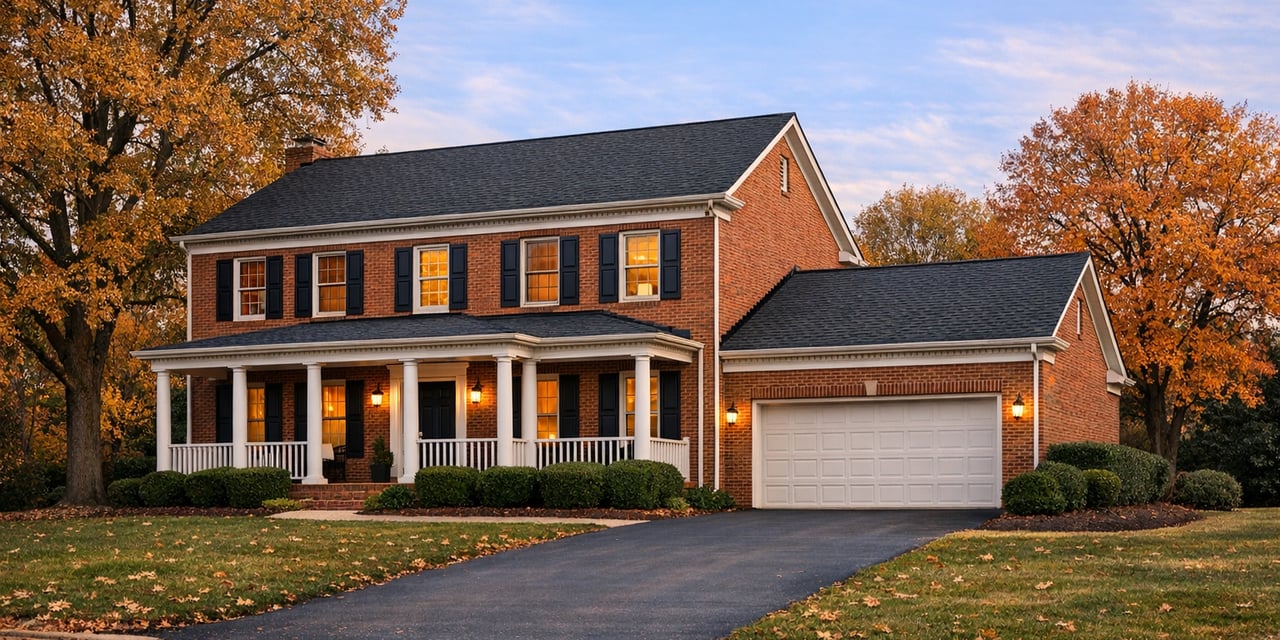
Is Your 3% Mortgage Keeping You in a Home You've Outgrown? A Northern Virginia Move-Up Guide
You bought your home when mortgage rates were around 3%. At the time, it felt like one of the smartest financial decisions you could make.
And it probably was.
But now? Maybe your family has grown. The spare bedroom has become your office, the kids need more space, or you've simply outgrown the home that once felt perfect.
You'd love a bigger home in Arlington, Fairfax, Vienna, McLean, or another Northern Virginia community. There's just one problem: giving up your 3% mortgage feels like giving up a financial advantage you'll never get back.
Here's what many Northern Virginia homeowners don't realize: your low mortgage rate isn't the only valuable asset you have.
The equity you've built, your home's current market value, and the way you structure your next purchase could make a bigger home more achievable than you think.
Before you decide to stay put, let's look at the real numbers, what's happening in the Northern Virginia housing market, and how to make your next move strategically.
Is It Worth Giving Up a 3% Mortgage to Buy a Bigger Home?
The short answer: It can be, especially if your current home no longer meets your needs, you have significant equity, and the monthly payment on your next home fits comfortably within your budget.
The important question isn't simply whether you're losing a great interest rate.
It's whether the financial and lifestyle benefits of moving outweigh the additional costs.
For some Northern Virginia homeowners, staying put is absolutely the right decision. For others, waiting could mean spending several more years in a home that no longer works for their family.
At KS Team, we help homeowners evaluate both sides of that decision, including their current home's value, their next home's potential cost, and the best strategy for buying and selling.
Why So Many Northern Virginia Homeowners Feel Stuck
There's a name for what you're experiencing: the mortgage lock-in effect.
It happens when homeowners hesitate to sell because replacing their existing low-interest mortgage with a new loan would significantly increase their monthly payment.
According to the Federal Housing Finance Agency's National Mortgage Database, approximately 49.9% of outstanding U.S. mortgages carried interest rates below 4% in the first quarter of 2026.
Meanwhile, Freddie Mac's Primary Mortgage Market Survey reported an average 30-year fixed mortgage rate of 7.11% for the week of November 12, 2026.
That's a significant difference.
Imagine owning a townhouse in Arlington with a 3% mortgage, knowing your family would be happier in a larger single-family home in Fairfax or Vienna.
You may have the income to afford the new property. You may even have substantial equity in your current home.
But the idea of doubling your mortgage payment makes you hesitate.
Here's the important part: you don't have to make that decision based on interest rates alone.
How Much More Would a Bigger Home Actually Cost?
Let's look at a simplified example.
Suppose you currently have a $400,000 mortgage at 3%, and you're considering a larger home requiring a $600,000 mortgage.
Scenario | Loan Amount | Interest Rate | Monthly Payment |
|---|---|---|---|
Your current mortgage | $400,000 | 3.00% | $1,686 |
Bigger home at your old rate | $600,000 | 3.00% | $2,530 |
Bigger home at November 2026's rate | $600,000 | 7.11% | $4,036 |
Bigger home if rates were 1% lower | $600,000 | 6.11% | $3,640 |
Illustrative principal-and-interest payments based on 30-year fixed loans. Actual payments depend on loan terms and do not include property taxes, insurance, HOA fees, or other ownership costs. This comparison assumes a new 30-year loan for each scenario.
In this example, the difference between your current payment and the new payment is approximately $2,350 per month.
But notice something important.
Approximately $843 of that increase comes from borrowing more money to purchase a bigger home. Another $1,507 comes from the higher interest rate.
Understanding that distinction helps you make a more informed decision.
And there's another factor that could change these numbers significantly.
Your home equity.
Your 3% Mortgage Isn't the Only Advantage You Have. What About Your Home Equity?
If you've owned your Northern Virginia home for several years, there's a good chance you've built equity through mortgage payments, property appreciation, or both.
That equity could become one of your most powerful tools when purchasing your next home.
How Much Equity Could You Use Toward a Bigger Home?
Consider this hypothetical example:
Your Current Home | Estimated Amount |
|---|---|
Current home value | $750,000 |
Remaining mortgage balance | $350,000 |
Gross home equity | $400,000 |
Price of your next home | $1,100,000 |
In this example, you have approximately $400,000 in gross equity before selling costs, taxes, and any other outstanding obligations.
You wouldn't necessarily have all $400,000 available as a down payment. But after accounting for selling expenses and your financial reserves, a substantial portion could potentially go toward your next home.
That means you might need a much smaller mortgage than you originally expected.
And a smaller mortgage means less money borrowed at today's higher interest rates.
Why Your Home's Selling Price Matters So Much
Here's something move-up buyers sometimes overlook.
The amount you receive from selling your current home directly affects how much you need to borrow for the next one.
Selling strategically isn't just about getting a great price.
It's about protecting your purchasing power.
At KS Team, we focus on preparing, positioning, marketing, and negotiating home sales to help sellers maximize their net proceeds.
That can make a meaningful difference when you're moving into a higher-priced property.
Find Out What Your Home Could Be Worth Today
Before deciding that a bigger home is out of reach, start with one simple question:
How much equity could your current home provide toward your next purchase?
Your estimated home value is the starting point for building a realistic move-up strategy.
What Does the Northern Virginia Housing Market Look Like for Move-Up Buyers in Late 2026?
The Northern Virginia housing market has been changing, and some of those changes could create opportunities for homeowners considering a move.
According to the Northern Virginia Association of Realtors' October 2026 market report:
- Median sold price: $750,500, up 0.7% year over year.
- Closed sales: 1,152, down 19.5% from October 2025.
- Average days on market: 29 days.
- Active listings: 3,505, up 30.8% year over year.
What does this mean if you're thinking about upgrading?
You may have more homes to choose from than you did a year ago.
And depending on the neighborhood, property type, and seller's circumstances, you may encounter opportunities to negotiate on price, closing costs, or other terms.
However, there's another side to the equation.
If you're selling a condo or townhouse to move into a single-family home, you may face more competition from other sellers.
That's why your selling strategy matters just as much as your buying strategy.
Arlington, Fairfax, and Alexandria: What the Numbers Show
October 2026 market reports highlighted some important local differences.
Arlington: The median sold price reached approximately $807,500, up 1.6% year over year, while active listings increased 22%, according to ARLnow.
Fairfax County: The median sold price was approximately $739,450, down 0.7% year over year, with 810 closed sales, according to FFXnow.
Alexandria: The median sold price reached approximately $789,900, up 5.3%, while sales volume declined 27.3%, according to ALXnow.
These figures reinforce an important point: Northern Virginia isn't one single housing market.
A townhouse in Arlington, a condo in Alexandria, and a detached home in Fairfax may experience very different levels of demand.
The best move-up strategy starts with understanding both markets: the one you're selling in and the one you're buying in.
What If You Could Buy Your Next Home Without Worrying About Selling Your Current One?
For many homeowners, the biggest obstacle isn't just the mortgage rate.
It's the timing.
What if you find the perfect home before your current property sells?
What if your sale takes longer than expected?
What if you need the equity from your current home to make the down payment on the next one?
And what happens if you have to move twice?
These are some of the most common concerns we hear from move-up buyers across Northern Virginia.
The KS Team Move-Up Guarantee
KS Team offers a Move-Up Guarantee designed to help eligible homeowners navigate the process of buying and selling.
Rather than treating your sale and purchase as two unrelated transactions, our team helps you develop a coordinated strategy.
That includes evaluating your current home's market position, discussing the timing of your next purchase, and reviewing the options available through our Move-Up Guarantee.
The goal is to help you understand your choices before making a major financial commitment.
Every situation is different, and program eligibility and terms matter.
LEARN ABOUT THE KS TEAM MOVE-UP GUARANTEE
You can also schedule a free strategy session to discuss how the program might fit your specific circumstances.
Should You Sell Your Current Home Before Buying a Bigger One?
There is no single answer for every homeowner. Selling first can reduce financial uncertainty, while buying first can give you more control over finding the right property.
The best approach depends on your equity, financing, timeline, and tolerance for risk.
Option 1: Sell First, Then Buy
Selling your existing home before purchasing the next one may allow you to:
- Know exactly how much equity is available.
- Avoid carrying two mortgage payments.
- Strengthen your financial position when shopping.
- Reduce uncertainty about the sale proceeds.
The downside? You may need temporary housing if you can't coordinate both closings.
Option 2: Buy First, Then Sell
Buying before selling may allow you to:
- Move directly into your next home.
- Avoid rushing to find a property.
- Prepare your current home for sale after moving out.
- Make your purchase without a home-sale contingency, if your financing allows it.
However, you may need sufficient income, reserves, or specialized financing to qualify while still owning your current property.
Option 3: Use a Home Sale Contingency
A home sale contingency makes your purchase dependent on selling your existing property.
This can reduce certain financial risks, but it may make your offer less competitive, particularly when other buyers don't need to sell a home.
Option 4: Explore Bridge Financing or a HELOC
Some homeowners use short-term financing to access equity before their existing property sells.
A home equity line of credit (HELOC) or bridge loan may help fund the next purchase, but both involve costs and risks.
HELOCs often have variable interest rates, and bridge loans can be more expensive than traditional mortgages.
Discuss these options with a qualified lender before making a decision.
For a more detailed comparison, read our guide:
Should You Sell First or Buy First in 2026? A DMV Decision Guide
Can You Keep Your 3% Mortgage and Rent Out Your Current Home?
Yes, potentially. Some homeowners choose to keep their existing property as a rental while purchasing a larger primary residence.
This approach may allow you to retain your low-rate mortgage and build long-term equity in two properties.
However, it isn't right for everyone.
Before choosing this strategy, consider:
- Whether the rental income will cover your mortgage, taxes, insurance, maintenance, and potential vacancies.
- Whether you can qualify for the new mortgage while retaining the existing property.
- Whether you have enough reserves for unexpected repairs or periods without a tenant.
- Whether you want the responsibilities of being a landlord.
- How converting your primary residence into a rental could affect your future taxes.
Lenders have specific requirements for using rental income from a departing residence to qualify for a new mortgage. For example, Fannie Mae's Selling Guide explains how qualifying rental income is calculated and when additional documentation or reserves may be necessary.
There may also be capital gains tax implications if you eventually sell the property. Review IRS Publication 523 and speak with a tax professional before making this decision.
For some homeowners, keeping the first property can be a valuable long-term investment.
For others, selling and using the equity toward the next home is the financially stronger choice.
How Can You Reduce the Cost of Your Next Mortgage?
Giving up your existing low interest rate doesn't necessarily mean accepting every cost associated with a new mortgage without exploring alternatives.
Here are several strategies worth discussing with your lender and real estate agent.
1. Use More Equity Toward Your Down Payment
The more money you put down, the less you need to borrow.
For homeowners with significant equity, this can help reduce the impact of higher interest rates.
Just remember to maintain adequate savings for emergencies, moving expenses, and future home maintenance.
2. Negotiate a Seller-Paid Mortgage Rate Buydown
Some sellers may agree to contribute toward a mortgage rate buydown as part of the purchase negotiations.
A temporary buydown may reduce your payment for the first one or two years.
A permanent buydown may lower your interest rate for the full loan term.
These arrangements depend on your loan type, lender requirements, and negotiated seller concessions.
3. Explore Assumable Mortgages
Here's an opportunity many buyers don't know about.
Some FHA and VA mortgages may be assumable, meaning a qualified buyer can potentially take over the seller's existing mortgage terms, subject to approval and program requirements.
Imagine purchasing a home with an existing mortgage rate significantly below current market rates.
That could create substantial monthly savings.
However, you may need cash or additional financing to cover the difference between the outstanding loan balance and the purchase price.
Not every home or mortgage qualifies.
4. Compare Different Loan Structures
Depending on your finances and long-term plans, you might explore:
- A traditional 30-year fixed-rate mortgage.
- A 15-year fixed-rate mortgage.
- An adjustable-rate mortgage.
- A temporary or permanent interest rate buydown.
Each option involves tradeoffs.
For example, an adjustable-rate mortgage may offer a lower initial rate, but the payment can increase later.
Always compare the long-term costs and risks, not just the initial monthly payment.
5. Don't Build Your Plan Around Future Refinancing
Could mortgage rates fall in 2027 or beyond?
Possibly.
But no one can reliably predict exactly when or how much.
A future refinance could improve your financial situation, but it shouldn't be necessary for your new home to remain affordable.
The smartest move-up purchase is one that works with your finances today.
Which Northern Virginia Areas Should You Consider When Moving Up?
One advantage of living in Northern Virginia is the variety of communities and housing options available.
If you're moving from a condo or townhouse into a larger single-family home, the right location depends on your budget, commute, lifestyle, and priorities.
Arlington, VA
Arlington appeals to homeowners who want access to Washington, DC, established neighborhoods, parks, restaurants, and Metro connections.
Move-up buyers often explore neighborhoods such as North Arlington, Cherrydale, Lyon Village, and Donaldson Run.
Detached homes in many Arlington neighborhoods command premium prices, so understanding your equity and target monthly payment is especially important.
Fairfax, VA
Fairfax offers a wide variety of single-family homes, established communities, parks, shopping, and commuter access.
For buyers moving from a smaller townhouse, areas throughout Fairfax and Fairfax Station may provide opportunities to explore larger homes and outdoor space.
Vienna, VA
Vienna attracts buyers looking for established residential neighborhoods, local restaurants, parks, and access to major employment centers.
Depending on the neighborhood and property, move-up buyers can find everything from traditional detached homes to newer luxury construction.
McLean, VA
McLean is a popular choice for luxury move-up buyers who prioritize larger properties, proximity to Tysons and Washington, DC, and established residential communities.
Higher purchase prices make a well-planned selling and financing strategy particularly important.
Falls Church, VA
Falls Church offers a mix of established neighborhoods, renovated homes, newer construction, and convenient access to major Northern Virginia employment centers.
For homeowners looking to upgrade without moving too far from Arlington or DC, it may be worth exploring.
Reston and Herndon, VA
Reston and Herndon offer additional options for buyers seeking more interior space, outdoor amenities, and access to major transportation routes.
The right fit depends on your commute, preferred neighborhood, and the type of home you're looking for.
Not sure where your next home should be?
The KS Team can help you compare neighborhoods, available inventory, and the financial implications of moving from your current home into your preferred area.
EXPLORE HOMES FOR SALE IN FAIRFAX
When Does Moving Up Actually Make Financial Sense?
A bigger home isn't automatically a better financial decision.
But there are situations where moving may make sense despite a higher mortgage rate.
Your Current Home No Longer Meets Your Needs
Perhaps your family needs another bedroom, a dedicated office, accessible living space, or a different layout.
If your current home no longer supports your daily life, the value of moving goes beyond the interest rate.
You've Built Substantial Home Equity
A strong equity position may help you make a larger down payment, reduce the amount you borrow, or manage the transition between properties.
Your Income Can Support the New Payment
If the full monthly cost fits comfortably within your budget, including taxes, insurance, utilities, maintenance, and other obligations, a higher interest rate may be manageable.
You Plan to Stay in the Next Home for Years
Moving involves significant transaction costs.
If you're purchasing a home you expect to keep for many years, those costs may be easier to justify than if you're planning another move soon.
You've Found the Right Home at the Right Price
Sometimes a property meets your long-term needs in a way that your current home simply cannot.
That doesn't mean you should overpay.
It means you should evaluate the opportunity based on your finances, lifestyle, and long-term goals.
When Is Staying in Your Current Home the Better Decision?
There are also situations where keeping your low-rate mortgage makes more sense.
Consider staying put if:
- The new monthly payment would stretch your finances too far.
- You would need to use nearly all your savings for the purchase.
- A renovation could solve your space problems at a significantly lower cost.
- Your employment, income, or housing needs may change soon.
- You haven't identified a compelling reason to move beyond market speculation.
There's nothing wrong with deciding that your current home is still the best choice.
The goal isn't to move simply because you can.
The goal is to make the right move when it makes sense for you.
Don't Forget the Hidden Costs of Moving Up
When comparing your current mortgage payment with the cost of a bigger home, remember that the mortgage isn't the only expense.
Your move-up budget should account for:
- Real estate commissions and other selling expenses.
- Repairs, preparation, and potential staging costs.
- Buyer closing costs and prepaid expenses.
- Property taxes and homeowners insurance.
- HOA or condominium fees, where applicable.
- Moving expenses.
- Furniture, window treatments, and other household purchases.
- Higher utility bills.
- Maintenance and landscaping.
- Potential overlapping mortgage payments.
A larger property may also require a larger emergency maintenance reserve.
Before committing to a purchase, calculate the full cost of ownership rather than relying only on the advertised mortgage payment.
Your Step-by-Step Northern Virginia Move-Up Plan
If you're considering purchasing a bigger home in 2027, here is a practical way to start planning now.
Step 1: Find Out What Your Current Home Is Worth
Your estimated property value and remaining mortgage balance help establish your potential equity.
Start with a free KS Team home valuation.
Step 2: Determine Your Comfortable Monthly Payment
Work with a lender to understand what you can afford, including principal, interest, taxes, insurance, and other recurring expenses.
Focus on a payment you're comfortable maintaining, not simply the maximum loan amount you qualify for.
Step 3: Identify Your Next Home's Must-Haves
Decide what you're really moving for.
Is it another bedroom? A larger yard? A different commute? More flexible living space?
Separating your must-haves from your preferences can make your home search much more efficient.
Step 4: Develop Your Selling Strategy
Before listing, evaluate your property's condition, competing inventory, pricing, and marketing opportunities.
Your net proceeds could directly influence your next home's affordability.
Step 5: Choose Your Buy-and-Sell Timeline
Decide whether selling first, buying first, using a contingency, or exploring the KS Team Move-Up Guarantee best fits your circumstances.
Step 6: Explore Financing and Negotiation Opportunities
Ask your lender about loan options, rate buydowns, and the possibility of assumable mortgages.
Evaluate potential seller concessions and other negotiation opportunities on the purchase.
Step 7: Make Your Move With a Coordinated Plan
Buying and selling simultaneously involves many moving parts.
A coordinated strategy can help you manage deadlines, financing, negotiations, and the transition between properties.
Frequently Asked Questions About Moving Up in Northern Virginia
Is it worth giving up a 3% mortgage to buy a bigger house?
It can be worth giving up a 3% mortgage if your current home no longer meets your needs, your equity helps reduce the new loan amount, and the higher monthly payment remains affordable. Compare the complete financial costs and lifestyle benefits before deciding.
How much equity do I need to buy a bigger home?
There is no universal minimum equity requirement for moving up. The amount you need depends on the purchase price, down payment, loan program, closing costs, and whether you sell your existing home. A lender and real estate agent can help you calculate your options.
Can I use the equity in my current home to buy another house?
Yes. Homeowners may be able to use proceeds from selling their current property, a home equity loan, a HELOC, or certain bridge financing arrangements to help purchase another home. Each option has different eligibility requirements, costs, and risks.
Should I sell my townhouse before buying a single-family home?
Selling first may reduce financial uncertainty and clarify your available equity. Buying first may offer more flexibility in choosing your next property but could require additional financing or reserves. The right approach depends on your financial situation and local market conditions.
Can I buy a new home before selling my current home in Virginia?
Yes. Depending on your qualifications, options may include purchasing with available savings, using bridge financing, obtaining a HELOC, or making a contingent offer. KS Team also offers a Move-Up Guarantee that eligible homeowners can explore.
Is 2027 a good year to buy a bigger home in Northern Virginia?
Whether 2027 is a good time to move up depends on your finances, current home's value, available inventory, mortgage rates, and personal needs. Late-2026 data showed increasing inventory in Northern Virginia, but market conditions vary by location and property type. Evaluate current data when you're ready to move rather than relying on predictions alone.
What happens to my 3% mortgage when I sell my house?
In a typical home sale, your existing mortgage is paid off using the sale proceeds. You generally cannot transfer that same mortgage rate to a different property. Certain loan products have special provisions, but most homeowners obtaining a new mortgage will qualify under current lending terms.
Can I keep my low-rate mortgage and rent out my first home?
Potentially. You may be able to retain your existing mortgage and convert the property into a rental, subject to loan terms, occupancy requirements, and your ability to qualify for another mortgage. Consider rental expenses, reserves, taxes, and property management responsibilities before deciding.
Can a seller help lower my mortgage interest rate?
Yes. Depending on the loan program and negotiated purchase terms, a seller may contribute toward temporary or permanent mortgage rate buydowns. Seller contributions are subject to lender and loan-program limits.
What is the KS Team Move-Up Guarantee?
The KS Team Move-Up Guarantee is a program designed to help eligible homeowners navigate buying and selling. Specific benefits, conditions, and eligibility requirements depend on the program's written terms. Learn more at kerishull.com/move-up-guarantee.
Your Next Home Should Fit Your Life, Not Just Your Mortgage Rate
Your 3% mortgage is valuable.
But so is the equity you've built.
So is having enough space for your family, a home that supports your lifestyle, and a financial plan that works for your future.
You don't necessarily have to choose between making a smart financial decision and finding a home that better meets your needs.
The key is understanding your options before making a move.
At KS Team, we help Northern Virginia homeowners evaluate their current home's value, understand their buying power, and develop a strategy for moving into their next home.
Whether you're considering a larger home in Arlington, Fairfax, Vienna, McLean, Falls Church, or another DMV community, we're here to help you make an informed decision.
Ready to find out whether moving up makes sense for you?
Start with your home's value or schedule a free conversation about your options.
FIND OUT WHAT YOUR HOME IS WORTH
EXPLORE THE KS TEAM MOVE-UP GUARANTEE
SCHEDULE YOUR FREE MOVE-UP STRATEGY SESSION
Or call KS Team at (571) 487-8060.
You may be closer to your next home than you think.
Disclaimer: This article provides general real estate and financial information for educational purposes. Mortgage rates, loan eligibility, property values, market conditions, and program availability may change. Payment examples are illustrative and are not loan offers. Consult qualified mortgage, tax, and legal professionals regarding your individual circumstances. Housing options and services are available without discrimination in accordance with applicable fair housing laws.